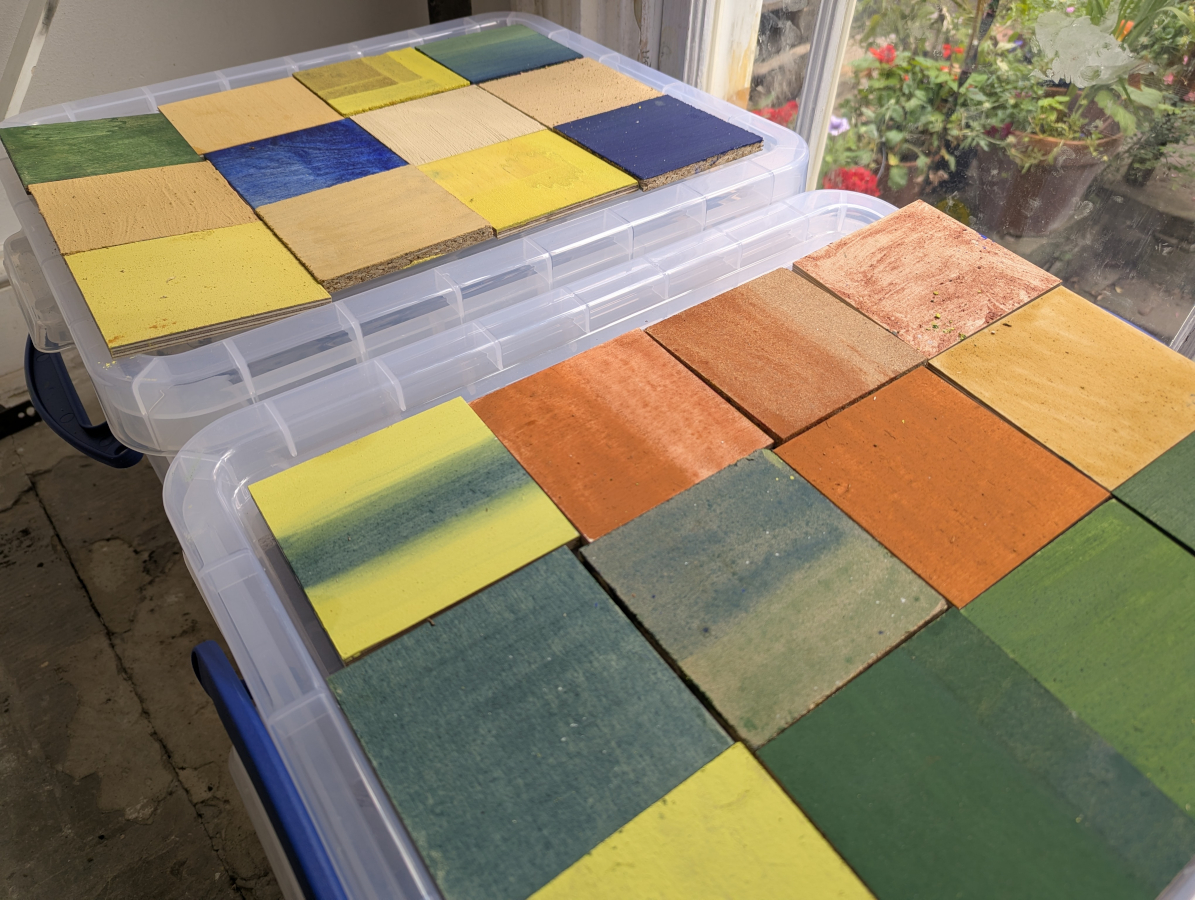
If you haven’t made your own natural paints, I HIGHLY suggest you try it.
Over the summer I had the opportunity to run a paint making workshop in Brighton and you can see the results.
Paints are mainly two parts:
1. Pigments – to give the paint its colour (mix a maximum of 3 pigments).
2. Binders – to act as a glue that holds the pigment together and to the surface. Many have been used including; linseed oil, plant protein, flour, sugars, beer, saliva and clay. Milk, animal fat, egg white and egg yolk have also been used but we are focusing on vegan paints.
It may also include:
3. Solvents – to change the thickness of the paint and make it easier to spread and use
4. Additives – to change other properties such as drying time, thickness, surface finish
Most modern paints are made with ingredients from raw fossil materials (1), which release volatile organic compounds (VOCs) and can trap moisture contributing to damp and mould. Some research suggests it could be the greatest source of microplastics in the environment (2). Even when you try to buy natural paints, they might have lower VOCs and still include harmful ingredients.
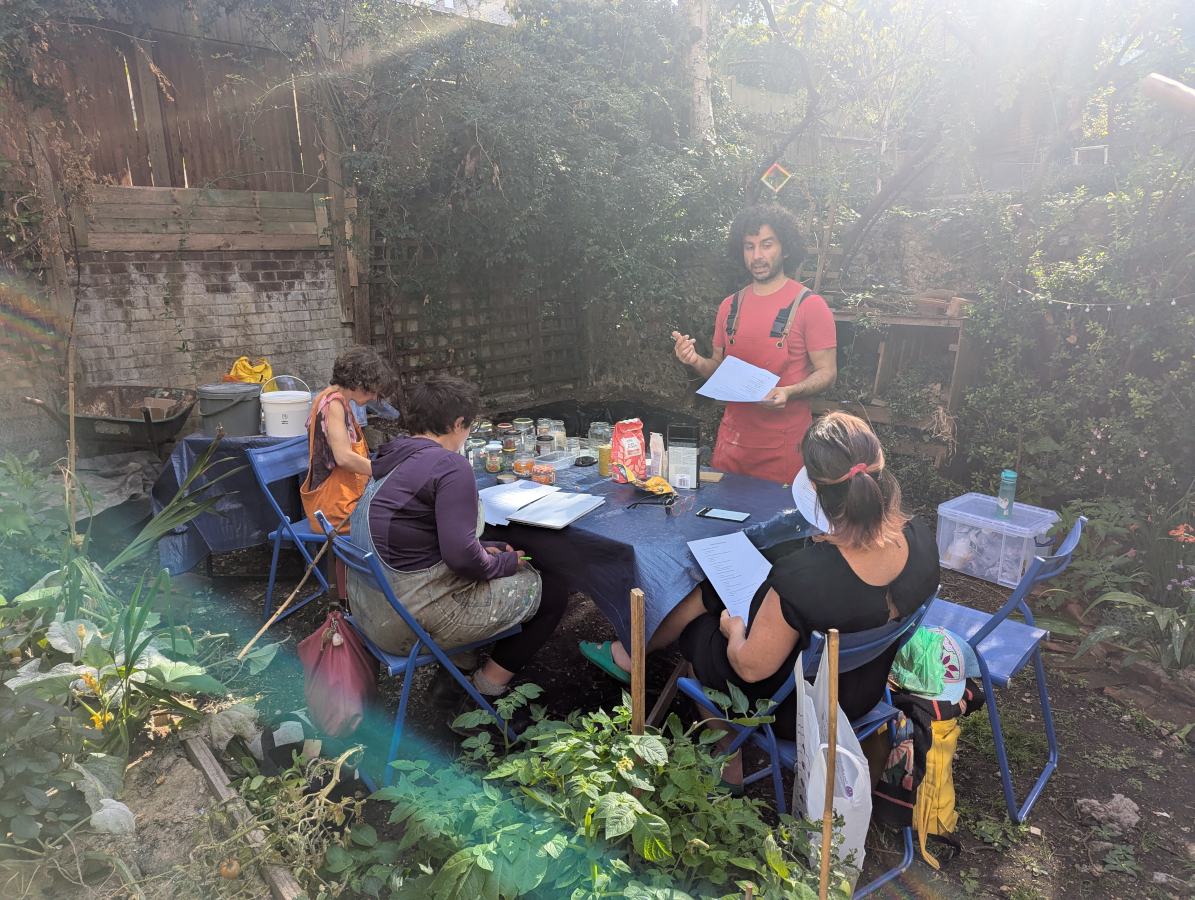
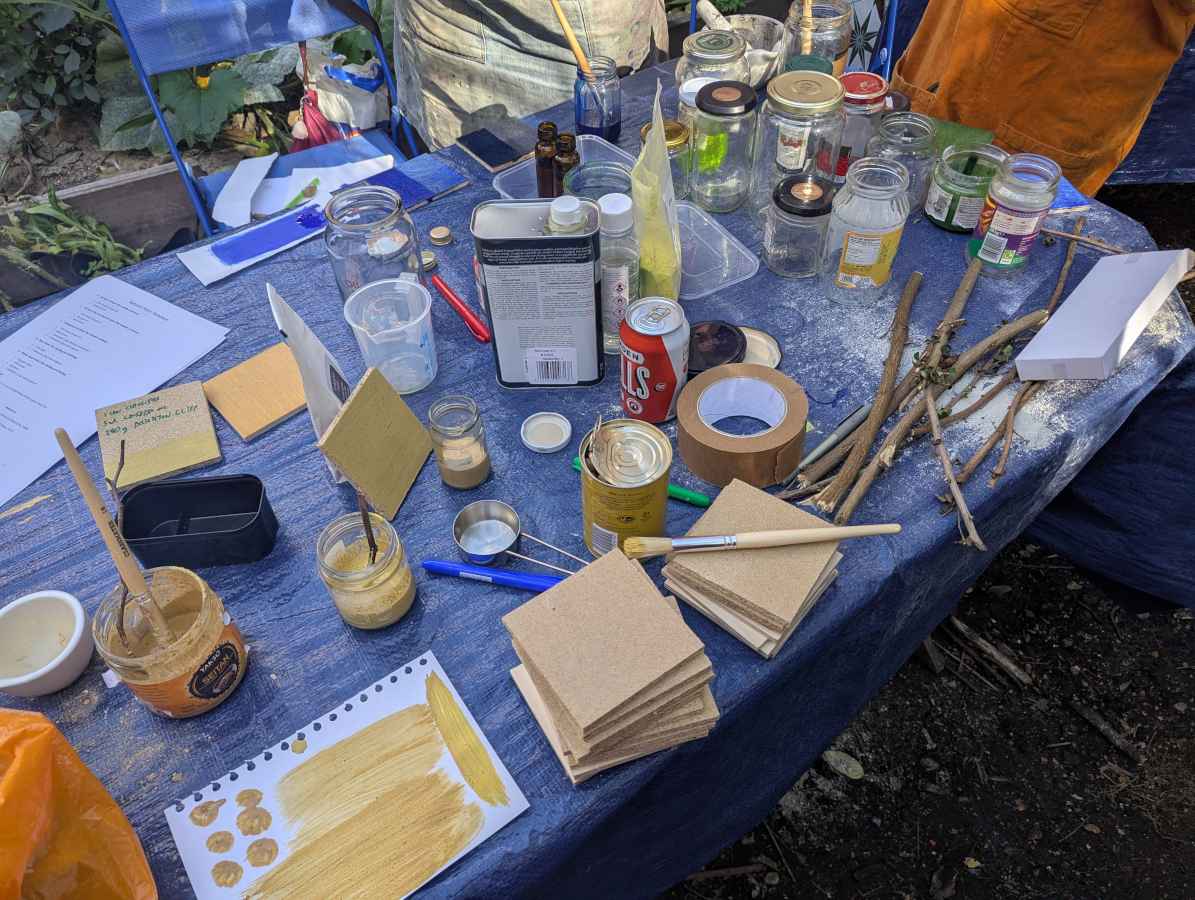
For thousands of years we have made our own paints from chalk, clay, resin, linseed oil, wood pulp, flour and other natural locally available ingredients. We should revive these techniques to reduce climate impacts, allow us to better care for our buildings and create healthier interior spaces.
This workshop is inspired by the work of Caroline Nicolay (https://www.instagram.com/pariogallico/), Lynn Edwards and Julia Lawless (authors of The Natural Paint Decorator) and Caroline Ross (author of Found and Ground: A practical guide to making your own foraged paints).
1 https://worldbiomarketinsights.com/the-petrochemicals-hidden-in-your-home/